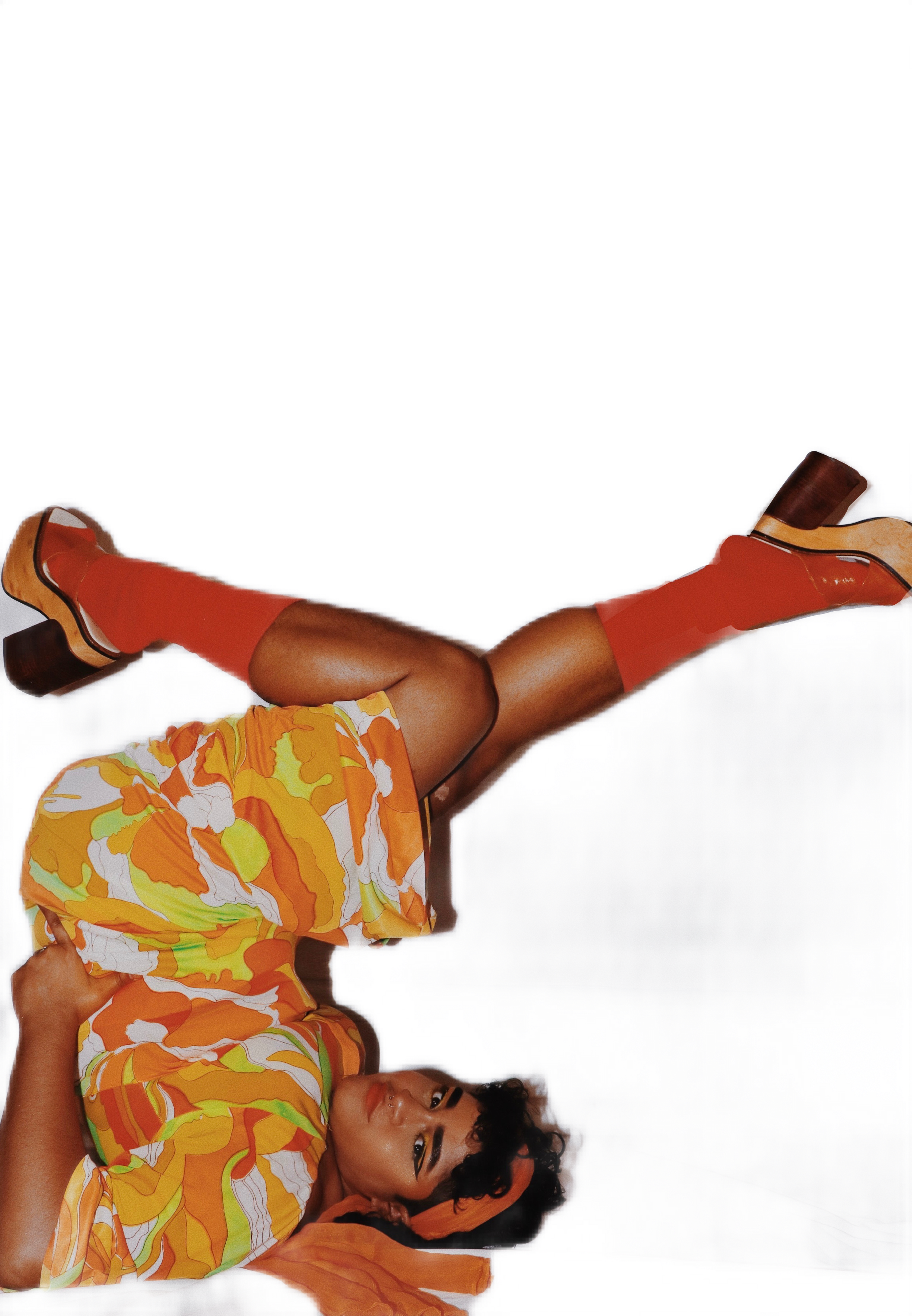
Tori Rodriguez is a Puerto Rican-Nicaraguan, queer actor whose work and identity are deeply shaped by experiences of cultural displacement, artistic discovery, and community. Raised in a small town in Southern Maryland as part of one of only two Brown families in town, Rodriguez grew up navigating a persistent sense of otherness and searching for representation in stories that rarely reflected the reality of their life outside of their Latin home.
Some of Rodriguez’s most formative memories came from summers spent in San Francisco and winters in the The Bronx, where they experienced the richness of diverse communities, Brown traditions, and cultural belonging that had been absent from daily life in Maryland. Those experiences would later influence both their artistic voice and personal identity.
Rodriguez continued their artistic training at University of the Arts, studying Acting and Film and expanding their creative foundation, through theatre, music, and performance.
Inspired by the radical artistry and visibility of queer icons from the 1960s, 1970s and 1980s, Rodriguez developed an artistic identity rooted in boldness, authenticity, and camp. Their perspective as a Latine, queer performer informs work that embraces individuality, challenges convention, and celebrates self-expression unapologetically.
Unapologetically Brown. Unapologetically queer. And always fully themselves.
ARTIST STATEMENT
I am a Non-Binary, Latine performer based in New York City, driven by the friction and harmony between past and present. My work lives at the intersection of reverence and rebellion—celebrating what has come before while challenging who it was made for. A graduate of the University of the Arts in Philadelphia, I’ve carried with me an enduring curiosity for the bold, the brand new, and the well-loved.
My practice is rooted in collaboration and community. I am particularly drawn to the creation of new work that interrogates dominant narratives, often reframing them through a queer, brown lens. This lens is not just a perspective—it’s a reclamation. It allows me to explore history not as something fixed, but as something alive, capable of transformation.
Whether performing, devising, or developing stories, I approach my craft with a deep sense of responsibility and joy: to honor those who came before, to amplify voices too often erased, and to carve space for complexity, contradiction, and care.